

Pictures of Ajay Devgn greeting Pakistan cricketer Shahid Afridi at the 2024 World Championship of Legends in Birmingham went viral on social media. Stripped of date, it angers nationalists post the Pahalgam Attack and India’s Operation Sindoor. The cultural, diplomatic, and economic freeze on Pakistan is still in place as the non-kinetic part of Operation Sindoor.

Many wonder why a “harmless” image is being used to cast aspersions on Ajay Devgn’s Rashtra Prem. However, the real question nationalists must ask is: when Pakistan‑based groups keep bleeding India, why does Bollywood bow low to their sportsmen or actors? Why does India’s biggest soft‑power industry engage with people across the border? And what optics cross the line between courtesy and forgetfulness?
Ajay Devgn-Shahid Afridi – The Viral Photos of 2024 WCL

Ajay Devgn attended the ECB‑approved World Championship of Legends T20 in July 2024 as a co‑promoter. There he met players from all squads, including former Pakistan captain Shahid Afridi. The meeting occurred before an India Champions vs Pakistan Champions fixture at Edgbaston. The recently viral photograph shows this polite chat. Ajay Devgn then moved down the line to greet other legends.
In 2024, Pakistani and Indian media noted the “rare frame” because “celebrities” from the two countries seldom appear together publicly since cross‑border bans hardened after NaPak terror strikes.
Frames from those meetings have recently recirculated as if current. Thus, it feeds outrage cycles in the wake of new attacks. While Indian players refuse to participate in any India-Pakistan WCL match, the picture is causing emotions to run high. A fact‑check traced the viral posts to the original July 2024 event and confirmed there was no recent “meet or conversation.” However, Afridi’s hatred of India is well known. Therefore, even rational voices are wondering why Ajay Devgn deigned to chat with this NaPak person?
Why Afridi Triggers Indian Backlash: Kashmir Rhetoric, War Jibes, & Social Media Provocations
Shahid Afridi repeatedly wades into the Kashmir dispute. In public appearances and interviews, he frames Kashmir as an India-occupied territory. Thereby, to defend the factually incorrect political line of his nation. He often frames the Modi regime as a travesty and echoes anti-India rhetoric as a public figure. His comments comparing PM Modi to a “virus” during a Pakistan‑controlled Kashmir visit sparked outrage. To cover up his foul ideology, Afridi later said his words were meant to showcase NaPak’s perception of “injustice” on Kashmiri rights.
In recent rallies tied to post‑Pahalgam tensions and Operation Sindoor, Afridi has used insulting and combative language about India.
He was even awarded by the Munir-Shehbaaz regime for celebrating Pakistan’s loss in Operation Sinddor as a victory. In his view, India was “paying a price” for the confrontation, amplifying Atankistan’s sentiment at home and anger across the border. A screenshot of his Instagram Story shows him calling PM Modi “spineless”! Afridi also provoked the Indian nationalists by mocking the Indian Defense Forces by inviting them to NaPakistan using Capt. Abhnandan’s comment by stating that the “Tea is Fantastic”! Shahid Afridi’s social media is a classic case of baiting Indian fury – his nuisance value outmatches his sportsman aura!

Indians read Afridi’s statements as the voice of Pakistan’s proxy terror architecture in J&K!
Afridi shall never talk about Pak-sponsored Lashkar‑e‑Taiba (LeT) and its front, The Resistance Front (TRF). Both are banned groups that still operate in Pakistan. Both are blamed for a string of civilian and security force killings in India. Afridi’s repeated political potshots make any public bonhomie with him by an Indian star a lightning rod.

Pakistan‑Linked Terror Doesn’t Pause—Why Memory Shapes Culture Wars
Indians are upset with the Ajay Devgn–Afridi photo. Some claim that the picture was clicked before Pahalgam ever occurred. However, rationalists point to a continuing trial of Pakistan‑based or Pakistan‑directed terror.

- The 9th June 2024 Reasi bus ambush that killed pilgrims en route from Shiv Khori to Vaishno Devi. The attack was quickly linked by intelligence to LeT handlers across the border; TRF had claimed the attack, only to retract it later.
- Barely a month later, five soldiers died in a July 2024 Kathua district attack on an Army truck in Jammu’s deeper belt. Such losses are part of a troubling pattern of renewed militant activity south of the Pir Panjal by Pakistan.
- Those assaults followed earlier Pakistan‑linked strikes: the January 2023 Dhangri (Rajouri) village killings of civilians; the April 2023 Poonch ambush that slew five Army personnel; and many more.

Bharat bleeds every year with repeated proxy‑outfit attacks and targeted civilian killings across decades. Army commanders state such attacks are designed to keep terrorism “alive” under new local‑sounding labels like TRF, PAFF, and others when Islamabad came under global pressure. The collective memory of these incidents fuels public impatience with any perceived normalisation of celebrity ties across the border.
Bollywood’s NaPak Equation: Markets, Morals & Mixed Signals

Bollywood’s relationship with Pakistan swings between collaboration, silence, and freezes – driven by terror shocks and Profit margins.
- After the 2016 Uri attack and India’s surgical strikes, the Indian Motion Picture Producers Association resolved to stop hiring Pakistani talent. Cinema owners in Pakistan briefly halted Bollywood releases.
- Pulwama 2019 hardened the call for bans. The All India Cine Workers Association (AICWA) announced a total ban on Pakistani artists. Ajay Devgn himself publicly refused to release Total Dhamaal in Pakistan. Thus, showing alignment with the mood of the nation. However, the “nation first” sentiment rarely sweeps the industry, which is obsessed with profits permanently.
- The pattern repeats after the Pahalgam massacre in 2025 and India’s retaliatory Operation Sindoor. Industry bodies renewed bans. Yet, the Punjabi Singer-cum-Actor Diljit Dosanjh refuses to halt his Sardaar 3! The government leans on OTT platforms to strip Pakistan‑origin content. The social media of NaPak actors remains locked in India. The AICWA condemned Pakistani celebrities over perceived anti‑India remarks, warning Indian collaborators of consequences if the ban is not obeyed.
These escalations show how cultural doors slam shut whenever terror escalates. However, they are opened again whenever public anger fades. However, this time, Bharat does not want to play nice. Hence, even a year‑old handshake photo can explode amid grief and nationalism.
Courtesy vs Complicity: Reading the Ajay Devgn–Afridi Moment Fairly
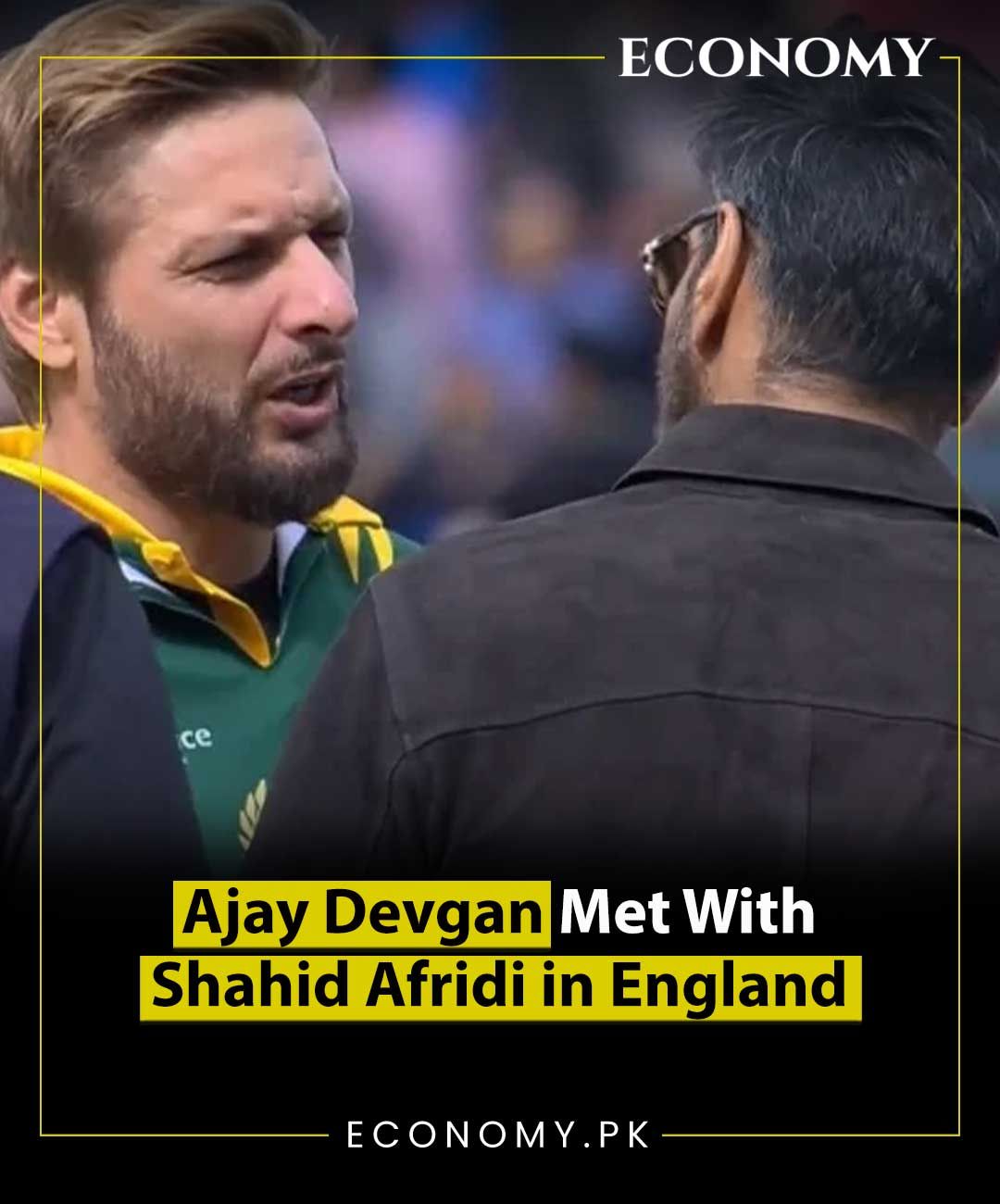
So, did Ajay Devgn “bow” to Pakistan? Not recently. However, he was performing a ceremonial role at a multinational veterans’ cricket league. Thus, in 2024, he was asked to meet all teams. Ajay Devgn’s record is pro-India. He even has a recent movie aligned to release on Bhagat Singh’s life and sacrifices. However, despite knowing Shahid Afridi’s anti-India take, Devgn stayed to converse with the man. Conflating his sports handshake with political ideology’s surrender would be unfair.

However, Bollywood’s broader cross‑border choices color the public perception of any actor.
The real debate India needs is larger: How should its entertainment industry balance global outreach, diaspora markets, and the moral weight of ongoing Pakistan‑sponsored terror? Selective outrage at viral clips misses the structural questions. While boycotts hurt the artists, it does not harm Pakistan. Content licensing, streaming monetisation in third‑country markets, influencer diplomacy, and the soft‑power leverage of India are forfeited when a Bollywood star appears with a NaPak icon. In such cases, images travel faster than facts or context.

A 2024 handshake in Birmingham is not a false flag or fake fury – it’s a legitimate question on Bollywood’s inability to distance itself from Pakistanis.
A proxy battlefield hurts India – the anger is built on years of bloodshed from Reasi to Poonch. India doesn’t need performative rage; it needs a consistent cultural policy. Bollywood needs to think twice about its impact on India’s public image. Artists must engage when it serves national interest, disengage from those who amplify anti‑India propaganda. Bollywood thrives on the emotions of Indians expressed via art. Hence, it should never forget the victims whose names barely trend after the next viral clip.
That balance—firm memory, fair context—is the real test of Bollywood’s spine.